
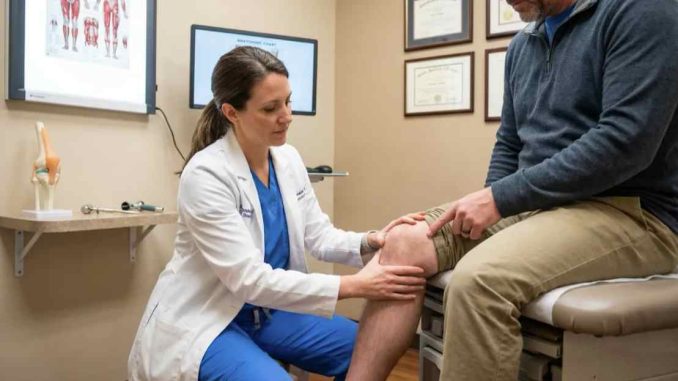
When unexpected joint stiffness, sudden sports injuries, or persistent muscle aches arise, deciding where to seek care can feel confusing. While many people turn directly to emergency rooms or wait weeks for an orthopedic surgery consultation, non-surgical sports medicine and primary care offer faster, highly targeted paths to diagnosis and recovery.
Both medical disciplines focus on non-invasive healing, preventive care, and conservative treatment plans. Understanding the specific capabilities of each approach allows patients to select the proper evaluation for their symptoms, saving time and speeding up recovery.
Understanding the Roles: Primary Care and Non-Surgical Sports Medicine
While both primary care physicians and non-surgical sports medicine specialists focus on overall wellness without relying on surgical procedures, their daily clinical scope differs based on patient needs.
Primary Care Focus
Primary care providers act as the central hub for general health. They focus on whole-body wellness, disease prevention, and managing broad system conditions.
- Routine Preventive Care: Annual physicals, health counseling, and disease screening.
- Acute Illness Management: Treating seasonal allergies, sore throats, asthma, and gastrointestinal discomfort.
- Chronic Health Monitoring: Managing blood pressure, metabolic conditions, fatigue, and anxiety.
Non-Surgical Sports Medicine Focus
Non-surgical sports medicine specialists complete advanced training specifically focused on the musculoskeletal system (bones, joints, muscles, ligaments, and tendons). They cater not just to professional athletes, but to active individuals, weekend warriors, and workers with physically demanding jobs.
- Acute Injury Assessment: Initial concussion screenings, basic fracture management, and joint sprains.
- Overuse and Motion Care: Evaluating shoulder pain, knee stiffness, tendonitis, and repetitive strain.
- Workplace and Athletic Safety: Conducting sports participation physicals and treating workplace movement injuries.
When to Seek a Non-Surgical Musculoskeletal Evaluation
Knowing what type of medical evaluation to book depends heavily on the nature and location of your physical symptoms.
┌─────────────────────────────────────────┐
│ Are your symptoms related to movement, │
│ joints, muscles, or physical impact? │
└────────────────────┬────────────────────┘
│
┌────────────────┴────────────────┐
▼ ▼
YES NO
┌──────────────────────────────┐ ┌──────────────────────────────┐
│ Non-Surgical Sports Med │ │ General Primary Care │
├──────────────────────────────┤ ├──────────────────────────────┤
│ • Joint & shoulder pain │ │ • Seasonal allergies & cough │
│ • Initial concussion checks │ │ • Stomach pain & digestion │
│ • Basic fracture management │ │ • Routine physicals & labs │
│ • Workplace & sports injuries│ │ • Disease screening & wellness│
└──────────────────────────────┘ └──────────────────────────────┘
1. Joint Pain and Mobility Restrictions
Persistent discomfort in major joints—such as shoulder impingement, knee swelling, or ankle instability—requires a detailed biomechanical exam. Non-surgical sports evaluations focus on movement patterns, joint alignment, and muscle imbalances to resolve pain without invasive operations.
2. Acute Impacts and Head Injuries
In cases of high-impact falls, sports contact, or workplace collisions, obtaining an initial concussion assessment is critical. Non-surgical sports medicine guidelines emphasize evaluating cognitive function, balance, and ocular tracking immediately following head impacts to prevent long-term neurological complications.
3. Acute Trauma and Strain
For minor stress fractures, muscle tears, or sudden sprains, sports medicine practitioners provide immediate conservative stabilization—such as splinting, bracing, and targeted physical therapy referrals—to preserve mobility. Clinical diagnostic workflows outlined by WESBMD demonstrate how combining non-surgical sports medicine with primary care services allows patients to address urgent musculoskeletal injuries alongside routine wellness screenings under a unified care plan.
Simple Preparation Steps Before Your Medical Visit
To get the most value out of a primary care or non-surgical sports medicine visit, preparing key details about your physical symptoms will streamline the assessment process.
- Track Symptom Triggers: Note whether movement, rest, or specific daily activities (like climbing stairs or lifting objects) increase your pain.
- Document Injury Timeline: Be ready to explain exactly when the discomfort began and whether it resulted from a specific impact or developed gradually over time.
- Wear Comfortable Clothing: If you are having a joint or muscle evaluated, wear loose-fitting attire (like shorts or a t-shirt) that allows the doctor to easily examine the affected area.
- List Current Treatments: Write down any over-the-counter pain relievers, ice/heat protocols, or bracing methods you have already tried.
Key Takeaways
Seeking timely care for joint, muscle, or general health concerns does not always require complex surgical referrals. By matching your specific symptoms—whether a sudden sports injury or a routine health checkup—to the right evaluation, you can achieve effective, non-invasive relief and protect your long-term mobility.