
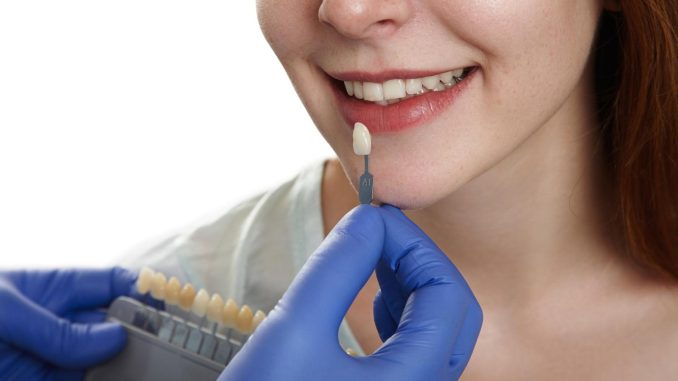
If you have damaged or missing teeth, restoring your smile doesn’t just improve your appearance—it also supports better oral health, chewing function, and self-confidence. Two of the most reliable and widely used solutions in restorative dentistry are dental crowns and bridges. Whether you’re dealing with a cracked tooth or a noticeable gap, understanding your options can help you make an informed decision. At Hughson Dental Implant Center, we provide customized crown and bridge treatments to help patients restore their smiles with lasting, natural-looking results.
This guide breaks down everything you need to know about crowns and bridges—including how they work, who needs them, and what to expect during the process.
🦷 What Is a Dental Crown?
A dental crown is a tooth-shaped cap that fits over a damaged, weakened, or misshapen tooth. Crowns restore strength, function, and appearance by encasing the visible portion of the tooth above the gumline.
Common reasons for a crown:
- Large cavities or fractured fillings
- Cracked or broken teeth
- Severely worn enamel
- After root canal treatment
- Covering a dental implant
Crowns can be made from materials such as porcelain, zirconia, ceramic, or metal alloys, depending on your needs, budget, and the location of the tooth.
🌉 What Is a Dental Bridge?
A dental bridge is used to replace one or more missing teeth by anchoring a false tooth (pontic) between two crowns placed on the adjacent healthy teeth or implants. This “bridge” literally spans the gap left by missing teeth.
Types of dental bridges:
- Traditional bridges (most common)
- Cantilever bridges (supported on only one side)
- Maryland bonded bridges (minimal prep, bonded to adjacent teeth)
- Implant-supported bridges (ideal for multiple missing teeth)
Bridges restore chewing function, prevent neighboring teeth from shifting, and maintain facial structure.
🧑⚕️ Who Needs a Crown or Bridge?
You may be a candidate for a crown or bridge if you:
- Have a decayed, cracked, or worn-down tooth
- Recently had a root canal and need structural support
- Are missing one or more teeth and want a fixed, non-removable solution
- Have difficulty chewing or speaking due to gaps
- Want to prevent further shifting or bite misalignment
Crowns and bridges are ideal for people looking for durable, long-term restorations that blend seamlessly with natural teeth.
🛠️ What’s the Procedure Like?
Here’s what you can expect with a crown or bridge treatment:
1. Initial Consultation
Your dentist evaluates the affected teeth, takes X-rays, and discusses your treatment goals. For bridges, they’ll assess the health of the anchor teeth or implants.
2. Tooth Preparation
For a crown, the tooth is reshaped to accommodate the crown. For a bridge, adjacent teeth are prepped for crowns. Impressions are taken and sent to a dental lab to create your custom restoration.
3. Temporary Restoration
A temporary crown or bridge may be placed while your permanent one is being fabricated—usually 1–2 weeks.
4. Final Placement
Your new crown or bridge is bonded in place, and your bite is checked for proper alignment. The result is a comfortable, natural-looking smile.
💡 Benefits of Crowns and Bridges
- Restore chewing and speech
- Prevent shifting teeth and bite problems
- Support facial structure and jawbone health
- Improve the appearance of damaged or missing teeth
- Durable and long-lasting with proper care
- Custom-made to match your natural teeth
🧽 Caring for Your Crown or Bridge
While crowns and bridges don’t decay, the underlying teeth and surrounding gums still need regular care. To maintain your restorations:
- Brush twice daily with fluoride toothpaste
- Floss carefully around the crown/bridge
- Use a floss threader or water flosser for bridges
- Avoid chewing hard foods or ice
- Schedule regular dental checkups and cleanings
With good hygiene and maintenance, a crown or bridge can last 10–15 years or more.
💲 Cost & Insurance
The cost of crowns and bridges varies depending on:
- Material used (porcelain vs. metal)
- Number of teeth involved
- Lab and provider fees
- Whether implants are needed
Most dental insurance plans cover a portion of the cost when the procedure is medically necessary. Ask your provider about financing or payment plans to make treatment more affordable.
Final Thoughts
Crowns and bridges are time-tested, effective solutions for restoring damaged or missing teeth. Whether you need to protect a weak tooth or replace one entirely, these custom restorations offer strength, stability, and aesthetics in one comprehensive solution.
If you’re in Hughson and considering dental crowns or bridges, a consultation with an experienced restorative dentist can help you explore your options and take the next step toward a confident, healthy smile.